The Hidden Complexity of Company Equipment
Managing company devices is not simply an inventory exercise.
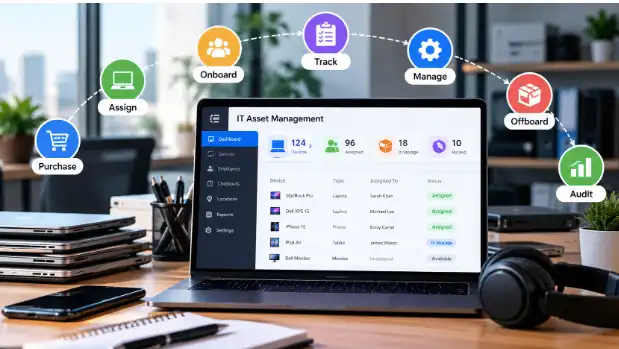
An organization's equipment has a lifecycle. A laptop may be purchased, configured, assigned to an employee, repaired, reassigned, returned during offboarding, stored for later use, and eventually retired.
Every stage creates information that someone needs to track.
For a small company, remembering these details may be manageable. As the workforce grows, manual tracking becomes harder to maintain. A spreadsheet might show that a laptop exists, but it may not tell the complete story of where the device is, who last used it, or whether it is ready to be issued again.
This is why IT teams need both the right processes and people who understand how those processes should work.
Why IT Teams Need Strong Asset Management Knowledge
Software can organize information, but it cannot replace good asset management practices.
IT staff need to understand how assets should be classified, assigned, tracked, reviewed, and retired. They also need to recognize what information should be recorded at each stage of the life cycle.
For teams looking to strengthen that knowledge, structured IT asset management training can provide a useful foundation for understanding the principles behind effective asset management.
The goal is not simply to learn terminology. A strong understanding of ITAM can help teams build more consistent processes and make better decisions about company equipment.
Why a Centralized Asset Record Helps
A centralized asset record gives IT teams one place to understand their equipment.
Instead of searching through multiple files, an administrator should be able to determine basic information about a device and its current status.
Useful records can include:
- Device type and model
- Serial number
- Purchase information
- Assigned employee
- Current location
- Assignment date
- Warranty information
- Lifecycle status
- Return or retirement information
The exact fields will vary between organizations, but consistency is important. If every device is tracked differently, reporting and audits become much more difficult.
Make Equipment Checkouts Easier to Track
Device assignment is one of the areas where IT teams can quickly lose visibility.
An employee receives a laptop, another person gets a monitor, and someone else takes a phone for business travel. Months later, the company may need to determine who currently has a particular item.
A simple checkout process can prevent this problem.
When equipment is issued, record what was given, who received it, when it was issued, and any relevant condition or return information. This creates an accountability trail without requiring employees to remember every transaction.
The same process should work when equipment changes hands.
Onboarding Is Easier With a Defined Process
New employees often need several pieces of technology before their first day.
If the IT team handles every onboarding request from scratch, small details can easily be missed. A laptop may be ready but missing an accessory. An account may not be configured. A device may have been assigned to someone else in an outdated spreadsheet.
A standardized onboarding checklist helps reduce these gaps.
IT teams can define what needs to happen before the employee starts, what should be completed on day one, and what information should be recorded after equipment is issued.
This creates a repeatable process rather than relying on individual memory.
Offboarding Requires Just as Much Attention
Employee departures create another important moment in the asset lifecycle.
When someone leaves, the organization may need to recover laptops, phones, access cards, monitors, or other company-owned equipment.
The challenge is not simply getting the physical equipment back. IT also needs to update records so the device is no longer associated with the former employee.
A clear offboarding process can include:
Confirm the Assigned Equipment
- Review the employee's asset record before the departure date.
Arrange the Return
- Provide clear instructions for returning company equipment, especially for remote employees.
Update the Asset Status
- Once equipment is received, record its new status and location.
Prepare It for Reuse
- If the device will be reassigned, make sure it goes through the appropriate technical and security procedures before reaching another employee.
This process reduces the chance of equipment disappearing into an administrative gap.
IT Audits Become Less Stressful With Better Records
Audits often expose weaknesses that have been accumulating for months or years.
An organization may discover that some devices have missing serial numbers, outdated assignments, unclear ownership, or incomplete lifecycle information.
Regular asset reviews can make formal audits much easier.
Instead of trying to reconstruct the company's inventory immediately before an audit, IT teams can maintain accurate records throughout the year.
This also makes it easier to identify unusual situations, such as devices that have not been assigned, equipment that has remained in storage too long, or assets associated with employees who have already left.
Don't Let Spreadsheets Become the Entire System
Spreadsheets are useful. They are inexpensive, flexible, and familiar.
The problem begins when a spreadsheet becomes the only system supporting a growing asset environment.
As the number of devices increases, maintaining formulas, assignment records, status fields, and historical information becomes more complicated. Multiple people may also create separate versions of the same file.
A dedicated IT asset management platform can provide a more structured environment for organizations that have outgrown basic spreadsheets.
But technology works best when the people using it understand the processes behind it. Without consistent asset management practices, even a sophisticated platform can end up containing incomplete or unreliable information.
Build Processes Around the Asset Lifecycle
The most useful approach is to think about assets as part of a continuous lifecycle rather than isolated inventory items.
A device moves through different stages:
Each transition is an opportunity to update the record.
This approach gives IT teams better visibility and helps management understand how company equipment is being used over time.
It can also support purchasing decisions. If an organization knows how many devices are available, which ones are approaching replacement, and which employees need equipment, future purchasing becomes easier to plan.
Better Asset Management Supports Better IT Decisions
Good asset management is not only about knowing where laptops are.
The information collected through asset processes can help IT teams identify patterns. Are devices being replaced too frequently? Are certain models creating more support issues? Is too much equipment sitting unused? Are employees regularly missing accessories during returns?
These questions become easier to answer when the underlying records are reliable.
The result is a more informed IT operation, with fewer decisions based purely on assumptions.
People Analytics: Using Data to Understand Your Workforce
Organizations that connect equipment tracking with workforce data gain a fuller picture of operational efficiency. Explore how people analytics links HR data to business outcomes →
Final Thoughts
As businesses grow, company equipment becomes harder to manage through memory and disconnected records.
A structured approach to IT asset management can help organizations maintain better visibility from the moment equipment is purchased until it is returned, reassigned, or retired. Just as importantly, knowledgeable IT teams can create processes that remain consistent as the organization expands.
The goal is not to create unnecessary administrative work. It is to create simple processes that make important information easy to find and act on.
When IT teams understand the asset lifecycle and know what equipment exists, where it is, who is responsible for it, and what stage it has reached, everyday operations become easier to manage and future decisions become much clearer.